01 · Overview
Overview
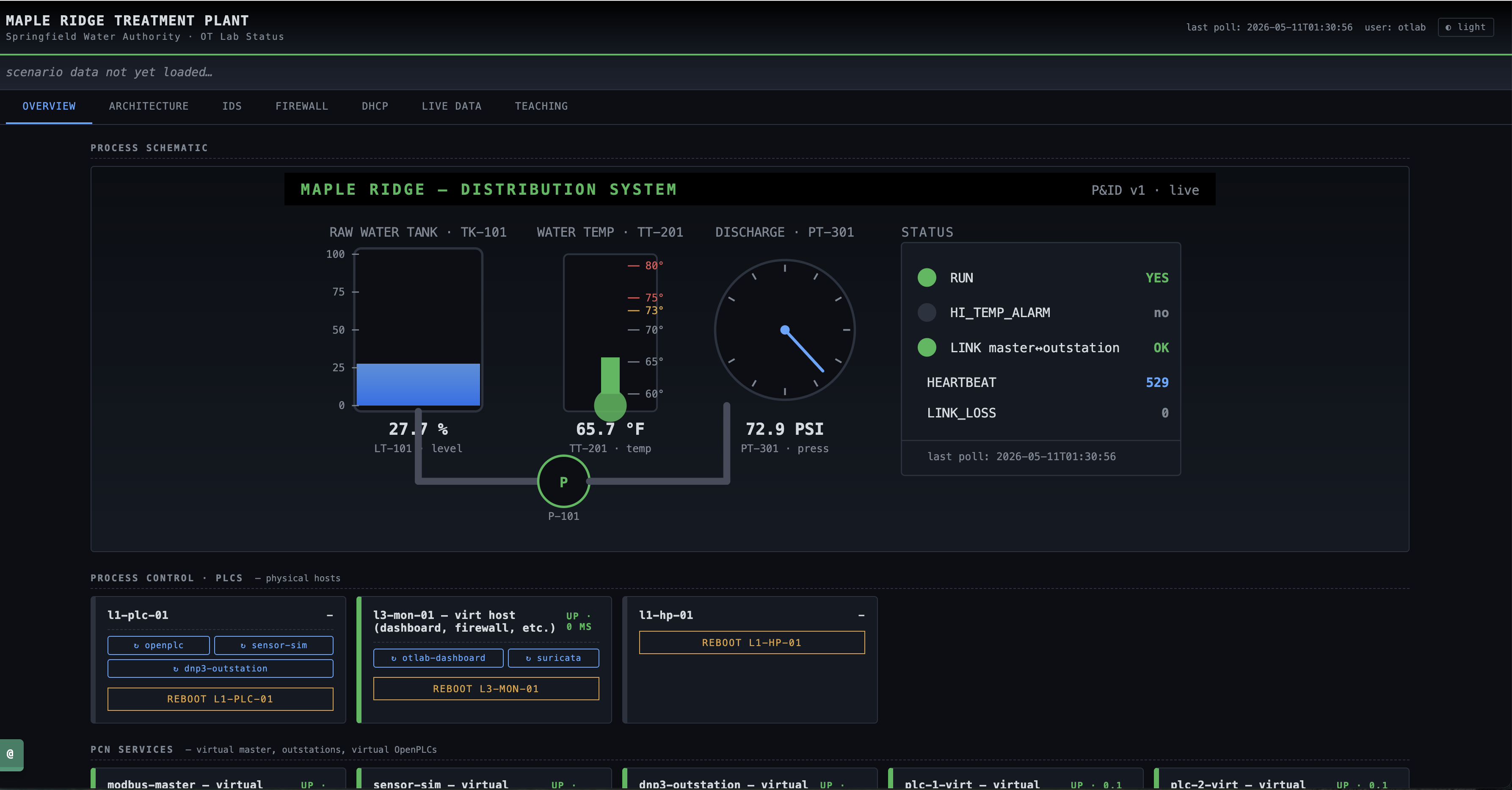
Live process state with an animated SVG synoptic, cards for every container, and live Modbus poll telemetry from the master loop.
A hands-on ICS / OT security training lab. One Raspberry Pi. Full DMZ + Process Control fabric: firewall, virtual PLCs, Modbus + DNP3, Suricata IDS, operator dashboard. Built for ICS Village at DEF CON.
OTLab packs an industrial DMZ + Process Control Network onto a single Raspberry Pi 5 using ContainerLab. Firewall, DHCP, DNS, virtual PLCs, Modbus and DNP3 outstations, a master polling loop, Suricata IDS, and a 7-tab operator dashboard: all in containers, all on one Pi.
The single-Pi build is shipped and working. Optional expansions (additional Pis with real GPIO, Conpot honeypot personas, RS485 industrial sensors, ESP32 wireless IoT) layer on top without changing the core lab.
Eight categories of real OT infrastructure, on the same Pi a student carries home in a backpack.
dnsmasq DHCP with static reservations. DNS forwarder integrated into the firewall, all queries logged: "DNS exfil at the firewall" as a teachable signal.modbus-master polling sensor-sim at 10 Hz: deterministic, observable Modbus TCP traffic on the wire.:8081 and :8082 for IEC 61131-3 click-around lessons.:20000.pcn-br0 with OTLAB rules for Modbus FC5/6/15/16 writes from non-master IPs plus SSH brute-force detection.The OTLab dashboard is a working water-utility operator surface. Animated process schematic, live IDS alerts, real firewall counters, a Modbus write playground: the same artifacts a defender works with on a real plant.
Live process state with an animated SVG synoptic, cards for every container, and live Modbus poll telemetry from the master loop.
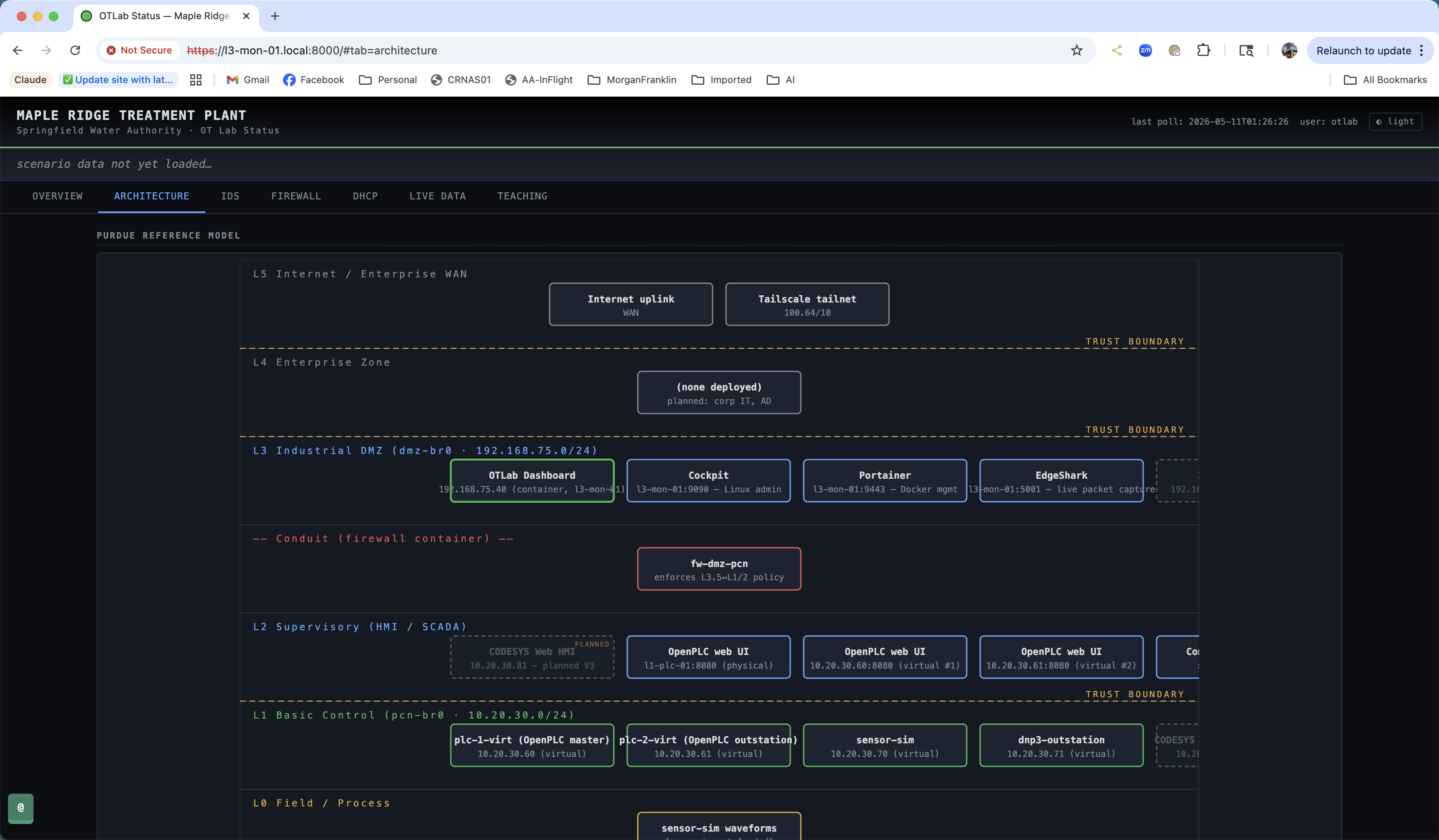
Purdue model with the lab's actual assets placed at their canonical levels, plus an auto-discovered network topology view.
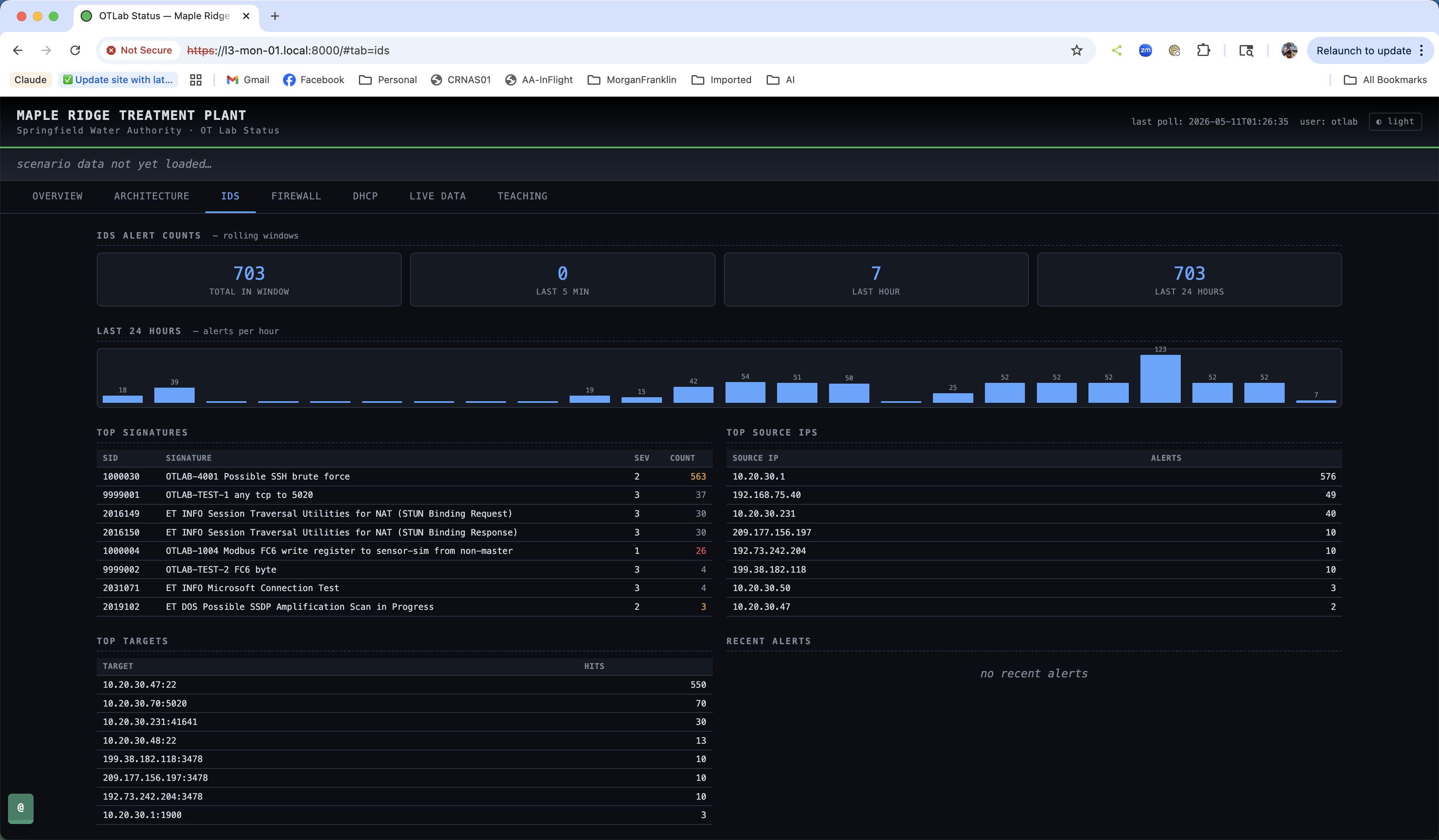
Suricata stats: counts (5m / 1h / 24h), 24-hour timeline, top signatures, top sources, top targets, recent alerts.
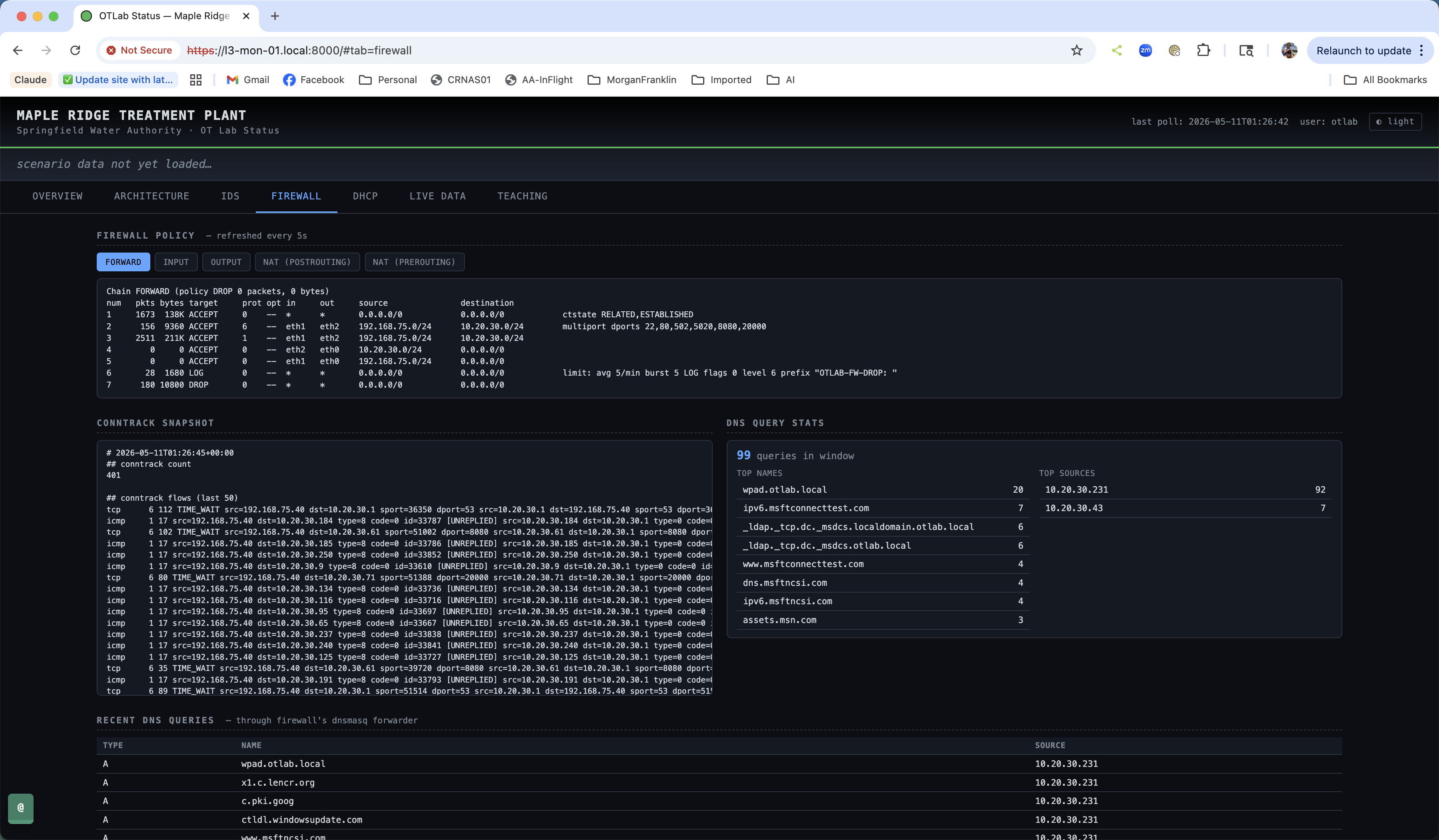
Live iptables (5 chains) with packet counters, conntrack snapshot, DNS query stats, and the rolling DNS log.
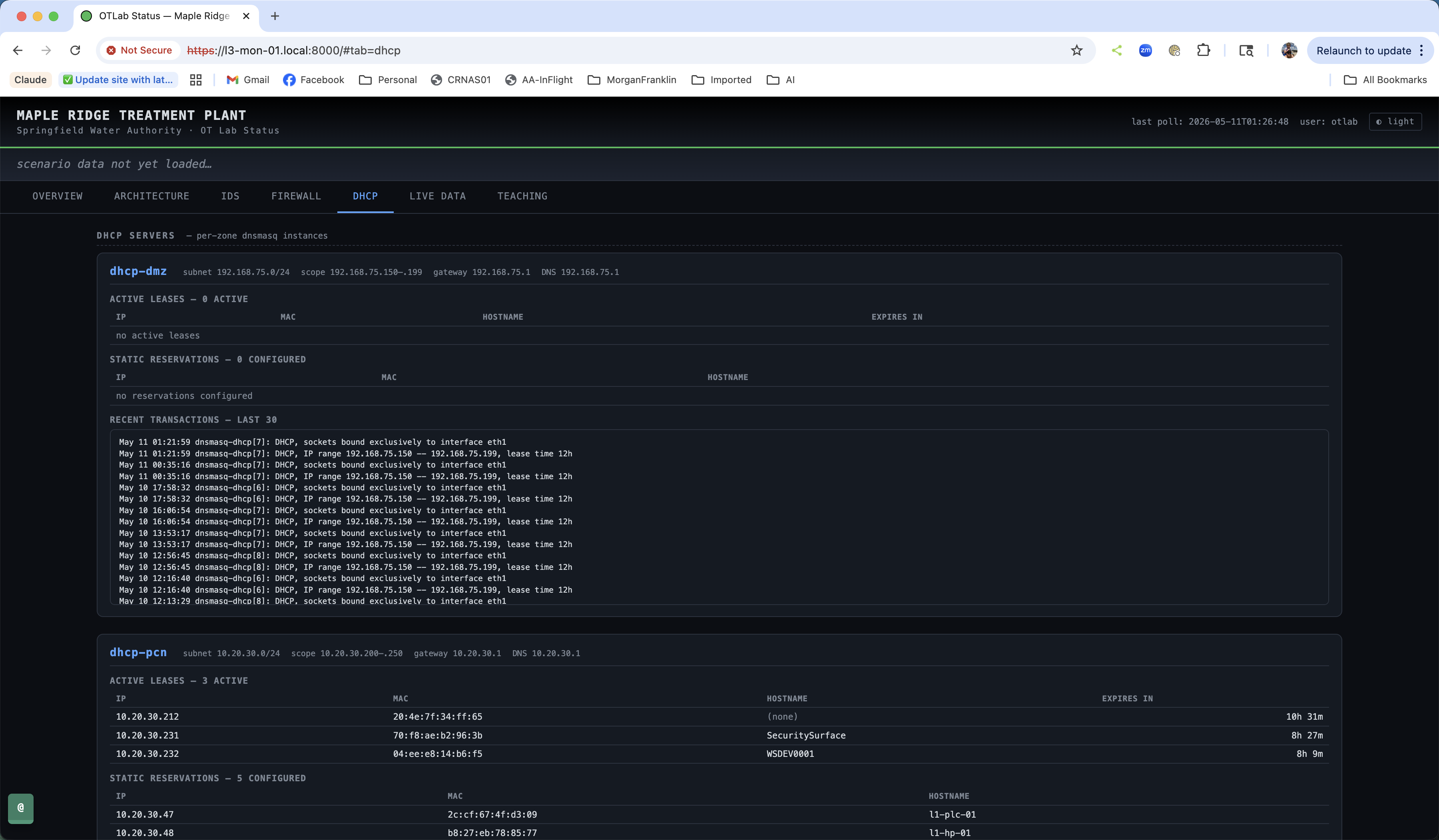
Per-zone (DMZ + PCN) lease tables, static reservations, and recent transactions.
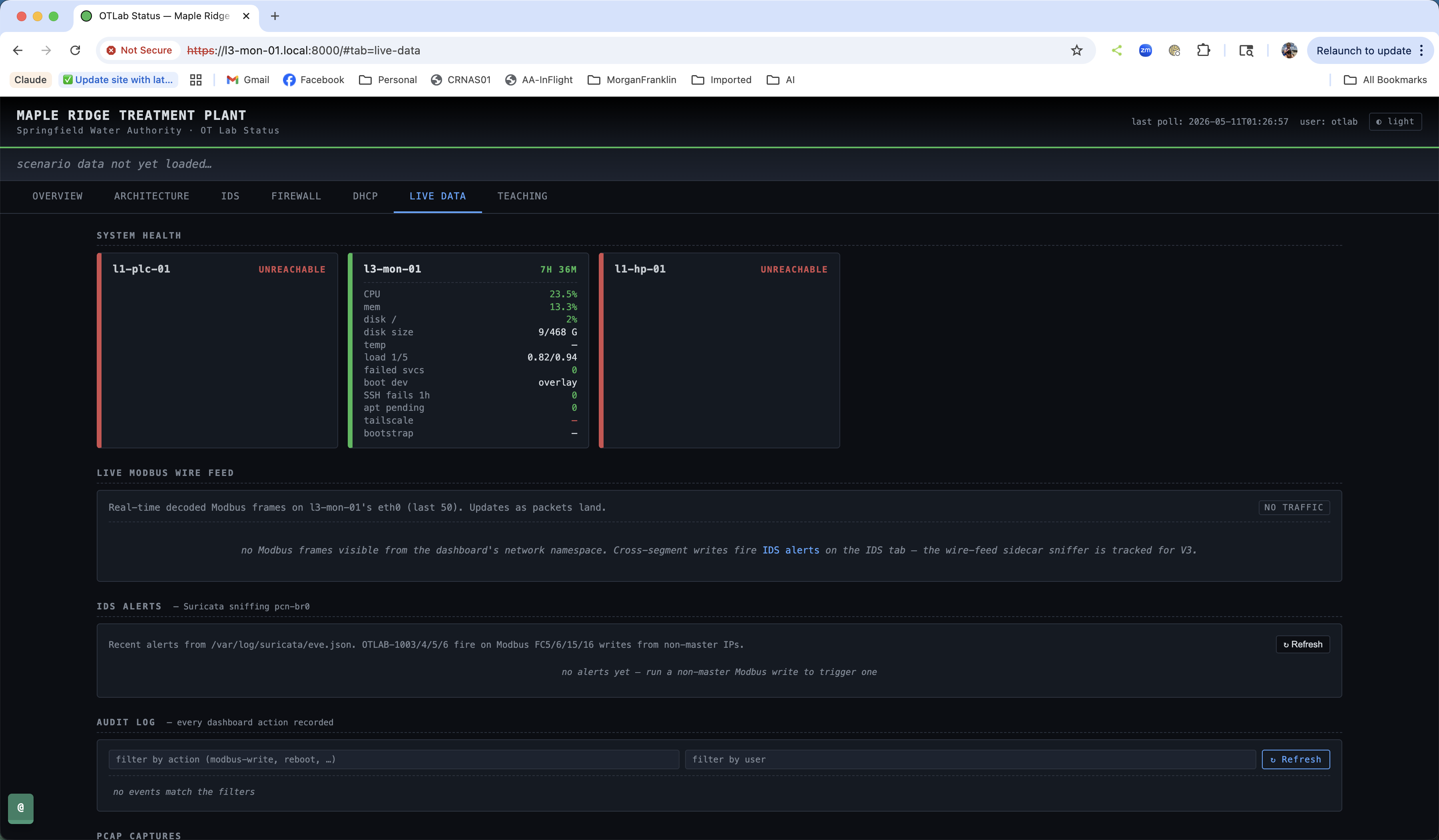
System health, full audit log, and on-demand pcap captures from the PCN bridge.
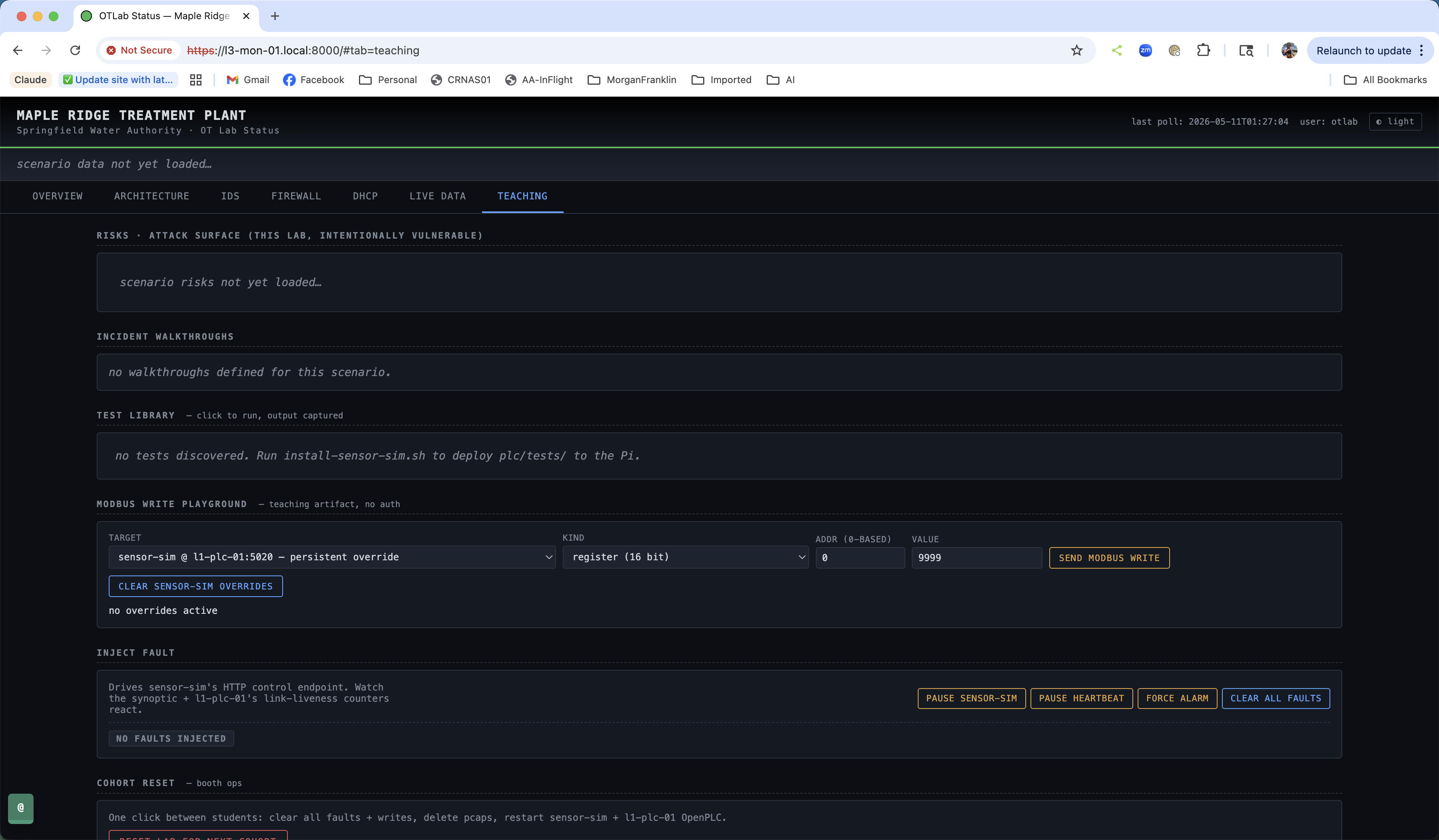
The lesson surface: scenario risks, incident walkthroughs, a runnable test library, the Modbus Write Playground (teaching artifact, intentionally no auth), Inject Fault, and one-click Cohort Reset between students.
Each stage is independent and optional. The single-Pi lab is fully functional on its own. You don't need any of these expansions to teach the core curriculum.
Add a second Raspberry Pi with real GPIO, real Modbus on the wire, and Phase 2 hardware: relays, indicators, pushbutton inputs. Students wire real I/O and watch ladder logic drive it.
OptionalThree vendor honeypot personas (Siemens / Schneider / Rockwell) running on a separate physical Pi. Great for teaching attacker enumeration vs. real OT vs. honeypot traffic.
OptionalConnect a real industrial sensor (temperature, energy meter, etc.) over RS485 using a Waveshare RS485-to-Ethernet gateway. Real fieldbus traffic next to the virtual fabric.
OptionalESP32 Modbus client over WiFi joining the PCN segment. Teaches wireless threat surface, MQTT/Modbus translation, and the "unmanaged device" reality of modern plants.
OptionalThe single-Pi lab is shipped and working. The next chunk of work is the curriculum: Attack/Detect/Defend exercises mapped to MITRE ATT&CK for ICS, CTF challenges, and runnable scripts in the dashboard's Teaching tab.
OTLab is the lab the ICS Village instructors actually carry. The curriculum is anchored to it. Students sit at the same dashboard, hit the same Modbus Write Playground, and watch the same Suricata alerts that the instructor demonstrated minutes earlier.

Instructor photos coming soon. Want to teach on OTLab?
 Academic Partnership
Operational Technology Security Fundamentals, a 3-week graduate course taught by David Cass (Federal Reserve Bank of NY) and Vladislav Gostomelsky (TP-Link). OTLab runs in the classroom.
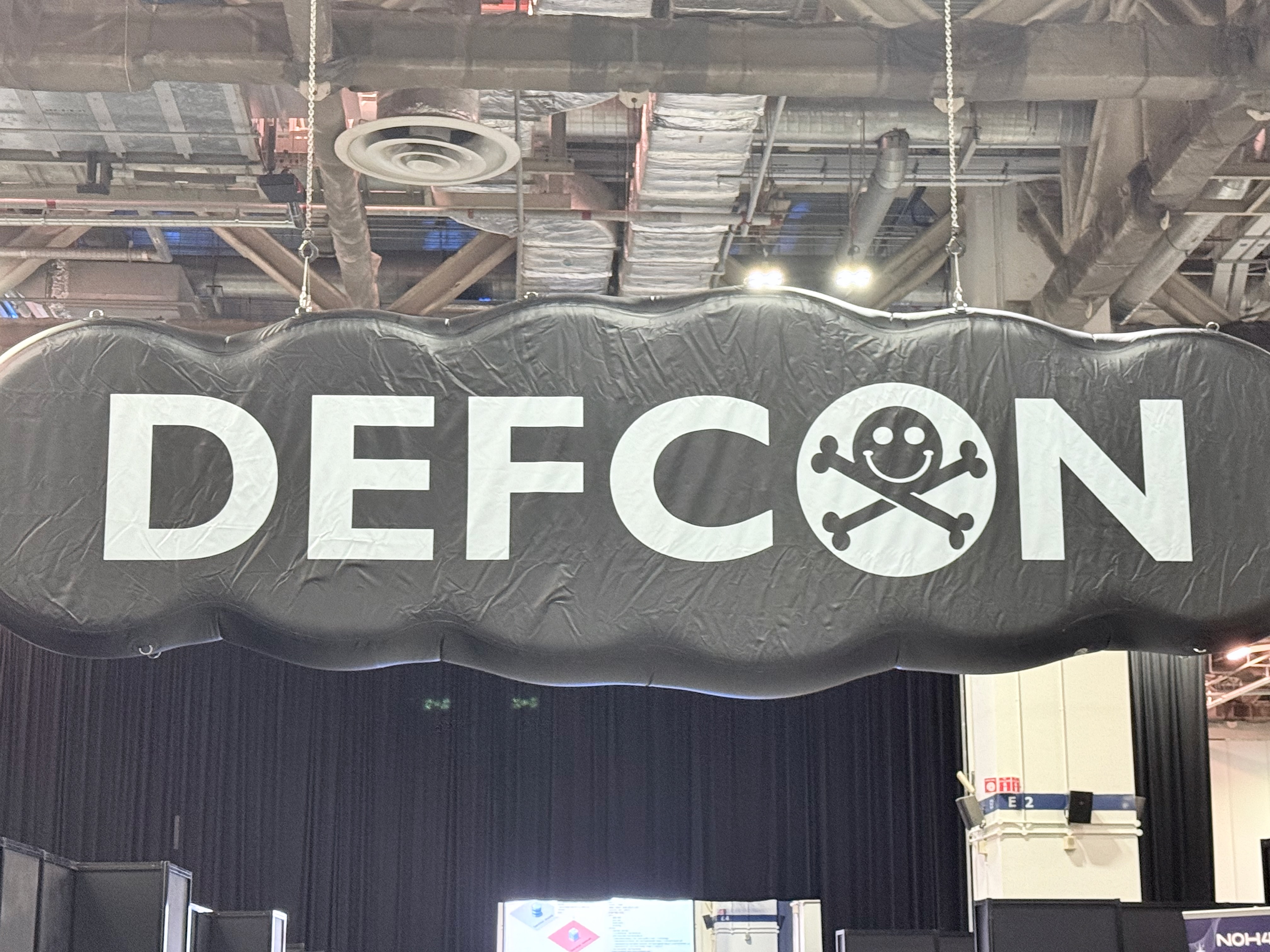
OTLab on the floor at every flagship DEF CON event, with the Trainer Kit fleet supporting hands-on sessions and the Modbus Write Playground open all weekend.
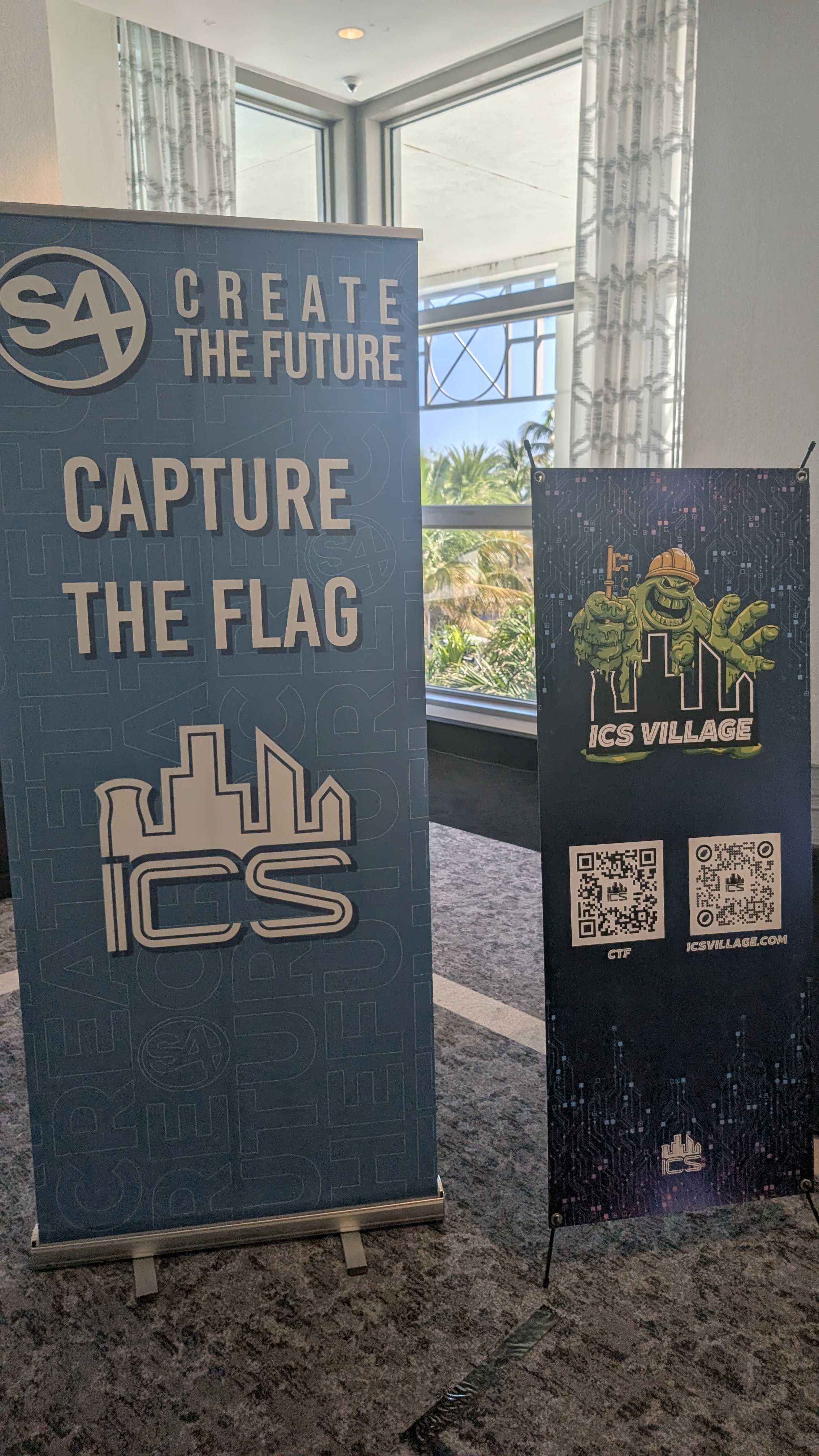
OTLab demos and capture-the-flag at the annual ICS Village policy convening in Washington. Practitioners brief regulators in front of a working plant.
Image a Pi, deploy the lab fabric, and run real Modbus traffic on your desk in under an hour. Sponsor a fleet for your conference, bring OTLab into a classroom, or take a private cohort through the curriculum.